
Click here for full text
The Promises of Self-Denial: Ground Rules | Luke 9:23–24
The preacher opens by reflecting on growing up in a tradition that didn't observe Lent or the church calendar — but being quietly drawn to the way other traditions structured the entire year around the story of Jesus. That instinct leads into the sermon's focus: self-denial. Not as a religious tradition to take or leave, but as something Jesus placed at the very center of what it means to follow him.
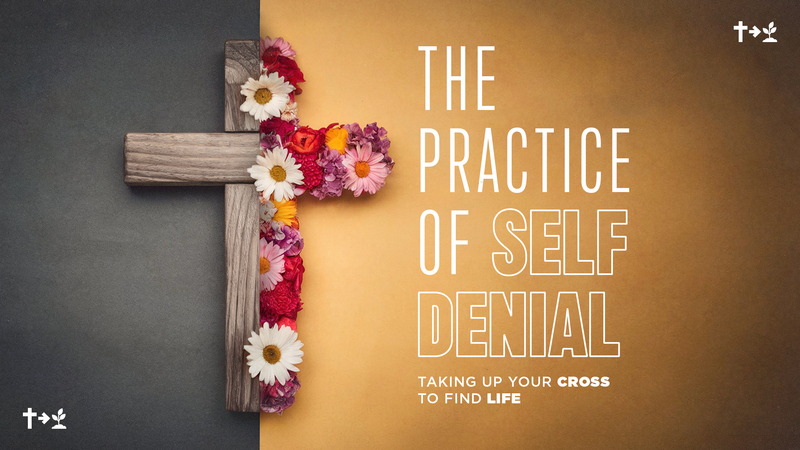
The anchor text is Luke 9:23–24 — "Whoever wants to be my disciple must deny themselves and take up their cross daily and follow me." Three ground rules frame the series.
Ground Rule 1 — Self-Denial is a Command. Jesus didn't suggest self-denial — he required it. The word must leaves no room for negotiation. Dietrich Bonhoeffer, who was executed by the Nazis for his convictions, wrote that "when Christ calls a man, he bids him come and die." The command isn't meant to crush us, the preacher argues — it's meant to free us. A command from Jesus is a form of grace.
Ground Rule 2 — Self-Denial is the Pathway to Life. Christianity has sometimes earned a reputation for joylessness, but that's not the God of Scripture. Jesus came to give life to the full. C.S. Lewis captures the real problem: our desires aren't too strong — they're too weak. We settle for mud pies when Jesus is offering the ocean. Self-denial isn't the elimination of desire; it's the redirection of desire toward something actually worthy of it.
Ground Rule 3 — Jesus Modeled It. On the night before the crucifixion, fully aware of his authority and power, Jesus picked up a towel and washed his disciples' feet. In Gethsemane he prayed, "Not my will, but yours." He never asks us to do what he wasn't willing to do himself — and he came out the other side not in defeat, but in resurrection.
The way of self-denial doesn't end in loss. It ends the same way Jesus' story did: in life.
